
















































































Events · eTN Team · Advertising · Subscription  
US Aviation

Oil-fueled catastrophe in the airline industry would cripple US economy and eliminate US jobs, study reveals

Oil-fueled catastrophe in the airline industry would cripple US economy and eliminate US jobs, study reveals
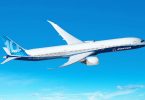
Image via skyas.aero

By eTN Staff Writer | Jun 23, 2008

A new study prepared by the Business Travel Coalition (BTC) has revealed that the skyrocketing price of aviation fuel will have devastating implications far beyond new surcharges for checked bags and in-flight beverage services. According to the BTC study, not only are US airlines and their passengers facing their darkest future, but fast-approaching airline liquidations will cripple the US economy that depends on affordable, frequent intercity air transportation.

The BTC study, “Beyond the Airlines’ $2 Can of Coke: Catastrophic Impact on the US Economy from Oil-price Trauma in the Airline Industry,” is projecting that massive job losses, supply chain disruption, declining business activity, shrinking tax revenues, weakened American competitiveness, devastated communities, and reduced tourism are just some of the predictable results from airline liquidations that could happen as early as the second half of 2008 as a direct result of unsustainable fuel prices.

The study expands on the analysis released on June 13, 2008 by AirlineForecasts, LLC and BTC and points to the real news about the airlines’ fuel problems: how multiple liquidations at legacy US airlines – now a serious possibility – would have a wide-ranging impact on many facets of the US economy.

“The airline industry stimulates so much economic activity – much more than many people currently understand,” said BTC chairman Kevin Mitchell. “Airline networks are an integral part of the transport grid that supports the US economy, and without immediate action to bring down fuel costs, we face the economic equivalent of a major blackout later this year or early next. Unlike in a blackout, however, the cabin lights may never come back on for many US airlines.”

“The runaway price of oil is seriously hurting working families at every level, and as the airline fuel crisis intensifies, the risk of major job losses in all travel and tourism sectors and in other airline-dependent industries increases as well,” stated Jean McDonnell Covelli, BTC member and president of The Travel Team, Inc., a wholly owned subsidiary of Rich Products Corporation. “As a matter of highest priority, elected officials must focus on devising an energy policy that will keep Americans productively traveling and working.”

According to the paper, “Airlines move people, but also high-value, time-sensitive or perishable cargo. Failure of one large airline would disrupt the travel of 200,000 to 300,000 passengers per day and thousands of tons of goods. The almost-full planes of remaining airlines would not be able to absorb much of these volumes. Failure of multiple airlines would paralyze the country and our American way of life, leaving us less productive, more isolated, less happy and more vulnerable.”

The BTC paper points to nine specific impacts of a collapse of the industry:

• Direct Employment. Between 30,000 and 75,000 would lose work immediately with just one airline failure, with payroll losses of $2.3 billion to $6.7 billion.

• Indirect Community Impact. Losses would ripple throughout communities given that each airline job creates large numbers of indirect local jobs, and other economic activity.

• Reduced Purchases from Suppliers. Airline purchases would cease at any failed carrier impacting companies that rely on airlines to keep their businesses afloat as well as public entities such as airports.

• Impact on Tourism. The world’s largest industry would be devastated in the US, with locally severe effects in places like South Florida, Hawaii, Las Vegas or Colorado, depending on which airline(s) fail.

• Effects on Logistics and Supply-Chain Management. Restaurants, pharmaceutical companies, manufacturers relying on just-in-time parts, florists, grocers and the fashion industry would be among those injured.

• Decline in Business Activity. Business travel – really the flow of human capital, which precedes or facilitates other flows – would be severely disrupted, with acute disruption in airline hubs and major cities.

• Declining Tax Revenues. Loss of income taxes paid by employees, coupled with the loss of excise, use and other airline-paid taxes would be bad news for governments already struggling with declining revenues.

• Increasing Government Outlays. Impacted individuals would immediately place demands on governments in the form of unemployment compensation, retraining and the demand for other resources.

• Weakened US Competitiveness. America competes with other countries for tourists, and with reduced air lift to the US, travelers would be less likely to visit the US and more likely to use non-US carriers.
The report will be presented and discussed during a US House Small Business Committee hearing scheduled by Chairwoman Nydia M. Velázquez this Thursday, June 26.



Comments


If the $2 charge per soda is going to solve the US
carriers financial problems, then its time
for those carriers to fire all their existing CEO and their so called Chief Financial Officers for being so short sighted on their long term survival. Whats keeping their carriers afloat - the 3 major ones serving South East Asia and beyond (United ,Northwest and American) is the law that says all employees of US government contractors (Companies such as Boeing, Northrop, GE) must use the so called FLAG carriers when flying to that part of the world - the fares are definitely much higher than most South East Asia carriers serving the same routes including the
World No 1 carrier Singapore Airlines.
Well, who ends up footing the bill ???
The American taxpayers, of course. Not only those companies are paying higher fares, the employees are not getting the kind of service, respect and hospitality they deserve.
Asian carriers' CEO don't get million dollars in Bonus when their Airlines are having a hard time making a profit - unlike US Carriers - the CEOs and all its Senior management staff are getting a big bonus every year "Rain or Shine". Its common sense that when a company has
a "negative" Profit and Loss account - where is the bonuses coming from ? You don't need an MBA degree to know that !
No wonder there are so many unhappy employees in the US Airlines Industry - the Senior Management are having a great time while the rest of the employees are getting SCREWED.


This comment will sound somewhat contrarian, but its origin is a healthy
distrust of airline moaning and groaning, with which we travel agents have had to contend since 1995 and even
earlier. Has anybody seen a fuel bill for a one-way airline trans-Pacific or trans-Atlantic journey, and balanced that off with the huge per-passenger fuel surcharges being made? I think it
would give us all a better perspective
of the situation. What are the airlines
afraid of? Southwest has been hedging fuel for years-must all other U S air carriers buy only on the spot market?
What are the executives who earn six-figure salaries doing to justify their money? How about some real answers, airlines?? Peter Miele


This time the US-airline industry seems to be in much deeper trouble than during the last downturn:
This time we face a combination of several factors, all adding up to a unpredictable future for many airlines.
It is obviously the price of fuel, which is the most visible factor.

The economic downturn in conjunction with a loss of buying power of the US-society which leads to a shrinking demand in teh US.

The different parameters for Ch.11 strategy - it´s time-limited and there is nothing to gain from labour anymore. This ressource has already been exploited during the past downturn and despite the following upswing labour did not profit from it - in contrary to most managements, who gained double-digit personal income-increases every year.

Also foreign markets are hit by the exploding energy-prices. Growthrates in China, India and the new uprising economies were possible because of cheap energy and cheap raw-materials.
Prices for fuel, electricity, steel, and other material are going up rapidly and subsidies for gasoline etc. decrease because the governments can´t afford it anymore - a loss of buying-power in these countries is the logical result which means less demand for air-travel.

And not to mention increasing political instability created by inflation...

There will be notonly one recipy to survive the crisis - but those airlines, who have low or none debts, who are able to hedge fuel, who have a young and adequate fleet, who have adequate numbers in workforce, who are still able to raise money in the market and who have responsible, knowledgable and trusted management being able to convince labour for joints efforts, those airlines have a good chance to survive.


I agree, in part with what you are saying; however you have failed to mention how many jobs in the travel industry have already been lost due to outsourcing. So isn't the whole world going to feel the effects of the strangulation hold the oil producing countries have on the world at this point? What about India, China, and Korea. Where will their economies be when they lose their jobs outsourced from the US. It is time the US pulls back, supports itself, and becomes self relient and developes our own fuel, bio or otherwise. We need to give our citizens back their jobs. Large corporations - airlines included should realize the people buying their airtickets live in the US. They need their jobs back in the US to be able to afford to purchase the goods the corporations are trying to sell in the US. People in China, Korea, and India are not buying our domestic tickets.


Post new comment

The content of this field is kept private and will not be shown publicly.
This question is to prevent automated spam submissions.
Image CAPTCHA
Copy the characters (respecting upper/lower case) from the image.