



























































Although all of Central Asia is landlocked, the worst condition is that of Tajikistan, and this is the greatest reason that this Central Asian country is not getting its due share in tourism and trade and stands as the poorest of all in Central Asia. Another reason seems to be its visa and permit system for traveling within the country that is discouraging the international travel market to sell it as a tourism destination.
The question that should come to mind is, why are the worst conditions being faced by Tajikistan?
Tajikistan is a mountainous landlocked country in Central Asia. Afghanistan borders it to the south, Uzbekistan to the west, Kyrgyzstan to the north, and China to the east. Gilgit Baltistan and Khyber Pakhtunkhwa of Pakistan are separated from Tajikistan by the narrow Wakhan Corridor of Afghanistan in the south.
China can connect to Kazakhstan through an expressway, but linkage of Tajikistan with this expressway has yet to be realized. This link is not open while Afghanistan is volatile country still in war and could be in war for many decades (since 1979, Afghanistan has never come out of war).
After independence, Tajikistan suffered from a devastating civil war that lasted from 1992 to 1997. Since the end of the war, newly-established political stability and foreign aid have allowed the country’s economy to grow. Trade in commodities such as cotton, aluminum, and uranium has contributed greatly to this steady improvement. However, foreign aid organizations look more interested in connecting Tajikistan with Afghanistan for travel and trade, and this strategy is hampering Tajik tourism and business.
The Pamir Mountains are the strongest product of this country, but the visa and entry permit system is one of the major impediments for the development of tourism towards the Pamir Mountains. When you travel along the Afghan-Tajik border, you need to have a special permit. When you wish to travel to the Badhakshan region, again you need a special permit from the Governor of Badhakshan. Border crossings with Uzbekistan and Kyrgyzstan are not very friendly and can be closed anytime without warning. Reaching Pamir Mountains needs too much work for international tour operators, so they are discouraged by the system and offer their clients Kyrgyzstan, Kazakhistan, or Uzbekistan instead of offering Tajikistan.
In all these downbeat states of affairs, Tajikistan tourism is surviving, and if foreign donors support Tajik tourism development without blending it with Afghanistan’s north tourism initiative, Tajikistan can become a hub of tourism activities in Central Asia. Tourism experts consider that Tajikistan is a country of many weaknesses but also has many advantages for developing a strong tourism base. Tajikistan has everything to offer – friendly people, beautiful valleys, and an abundance of natural beauty with the best possible opportunities of developing ecotourism.
Business and tourism arrivals remained low in 2009, 2010, and 2011 compared to its neighbors, due to the limited number of opportunities in the country. As a result, potential travel and tourism revenue remained thwarted.
Tajik airline is also not as proactive as Uzbekistan and Kazakhstan and has a limited number of international carriers such as Turkish Airlines AS and Air Baltic, which now have access to Tajikistan but still there is no link from South Asia directly to Tajikistan.
Tajikistan still has a strong potential to be an attractive destination for both leisure and business tourists. The beauty of Pamir Mountains could become a high-profile attraction for adventure tourists, while in business terms, the country may benefit from a growing number of business arrivals through investments in its hydro reserves.
There are some international organizations like Aga Khan Foundation and GIZ that are really helping a lot to develop trade and tourism in Tajikistan but mostly their concentration is in and around the areas of Wakhan Knot, the Wakhan belt, and Gorno Badakhshan Autonomous Oblast (GBAO). There are a lot of visa and permit processing involved in reaching these areas, therefore, attempts by these international organizations are not as fruitful for these areas as it could be if the border crossing and permit system was modernized, if not abolished.
It has been observed in research that involvement of the non-government sector to promote the tourism industry in Tajikistan is far higher than the government sector. This trend is good, however, such a trend cannot sustain itself for a longer period if the proactive support of the government is not provided, because decision making is in the hand of government and important decisions can make or break the tourism industry of any country.
Last year, an organization of Milal Inter held a wonderful forum for attracting investment to Gorno Badakhshan Autonomous Oblast (GBAO). GBAO borders with 3 countries – Islamic Republic of Afghanistan, Kyrgyz Republic, and the People’s Republic of China.
Based on the needs of entrepreneurs, the association of entrepreneurs and mountain farmers, “Milal-Inter,” together with the State Committee on investment and state property management under financial support of Gesellschaft für Internationale Zusammenarbeit (GIZ) GbmH had organized an investment forum, “Pamir Invest 2011.”
The Pamirs Eco-Cultural Tourism Association (PECTA) is also working hard to develop tourism through its members in Pamir mountain region. PECTA was founded in 2008 by a group of private-sector tourism businesses with the purpose of developing the tourism sector in the Pamirs through collaborative work.
PECTA is a membership-based association, which represents the Pamirs as a destination in national, regional, and international markets. Association members are grouped into categories based on services they provide and include tour operators, direct tourism service providers, guest houses, hotels, restaurants, retail stores, and home stays. By marketing the services of these members and offering support through training and capacity building, along with representing the destination as a whole, PECTA plays the role of a Destination Management Organization (DMO). Tours and services provide trekking, horse and camel riding, cultural tours, alpine and rock-climbing tours, jeep safaris, bird-watching and wild life observation tours, pilgrim tours, tailor-made tours, visa and permits, transfers, transportation, accommodation, guides, and equipment rental.
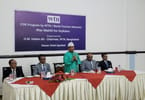
Pamir Highway Adventure and the Murghab Eco-Tourism Association (META) are founded and run by local people and promote tourism of Pamirs and Tajikistan.
The Murghab EcoTourism Association was established in 2003. The association participants, chosen from among the most economically-vulnerable families, received basic training, and a code of ethics was adopted by all stakeholders. The association has subsequently become a revenue-generating activity due to collaboration with other local development agencies. In particular, an association of women artisans has produced local craft goods that are now exported to various outlets in Central Asia and Europe.
The review of Tajikistan tourism indicates that some drastic decisions at the government level are needed to improve the situation, including offering connection with more international airports by its official airline, policies to offer incentives to international airlines to reach its airports, changes in its permit system, better facilities offered at cross-border points, and, of course, a massive media campaign to promote Tajikistan instead of depending upon only private and the non-government sector to promote the country as a destination.
The author of this article, Agha Iqrar Haroon, is the former Consultant to the Ministry of Tourism for the government of Pakistan and the former President of the Ecotourism Society Pakistan (ESP).
WHAT TO TAKE AWAY FROM THIS ARTICLE:
- Although all of Central Asia is landlocked, the worst condition is that of Tajikistan, and this is the greatest reason that this Central Asian country is not getting its due share in tourism and trade and stands as the poorest of all in Central Asia.
- Tajik airline is also not as proactive as Uzbekistan and Kazakhstan and has a limited number of international carriers such as Turkish Airlines AS and Air Baltic, which now have access to Tajikistan but still there is no link from South Asia directly to Tajikistan.
- There are some international organizations like Aga Khan Foundation and GIZ that are really helping a lot to develop trade and tourism in Tajikistan but mostly their concentration is in and around the areas of Wakhan Knot, the Wakhan belt, and Gorno Badakhshan Autonomous Oblast (GBAO).